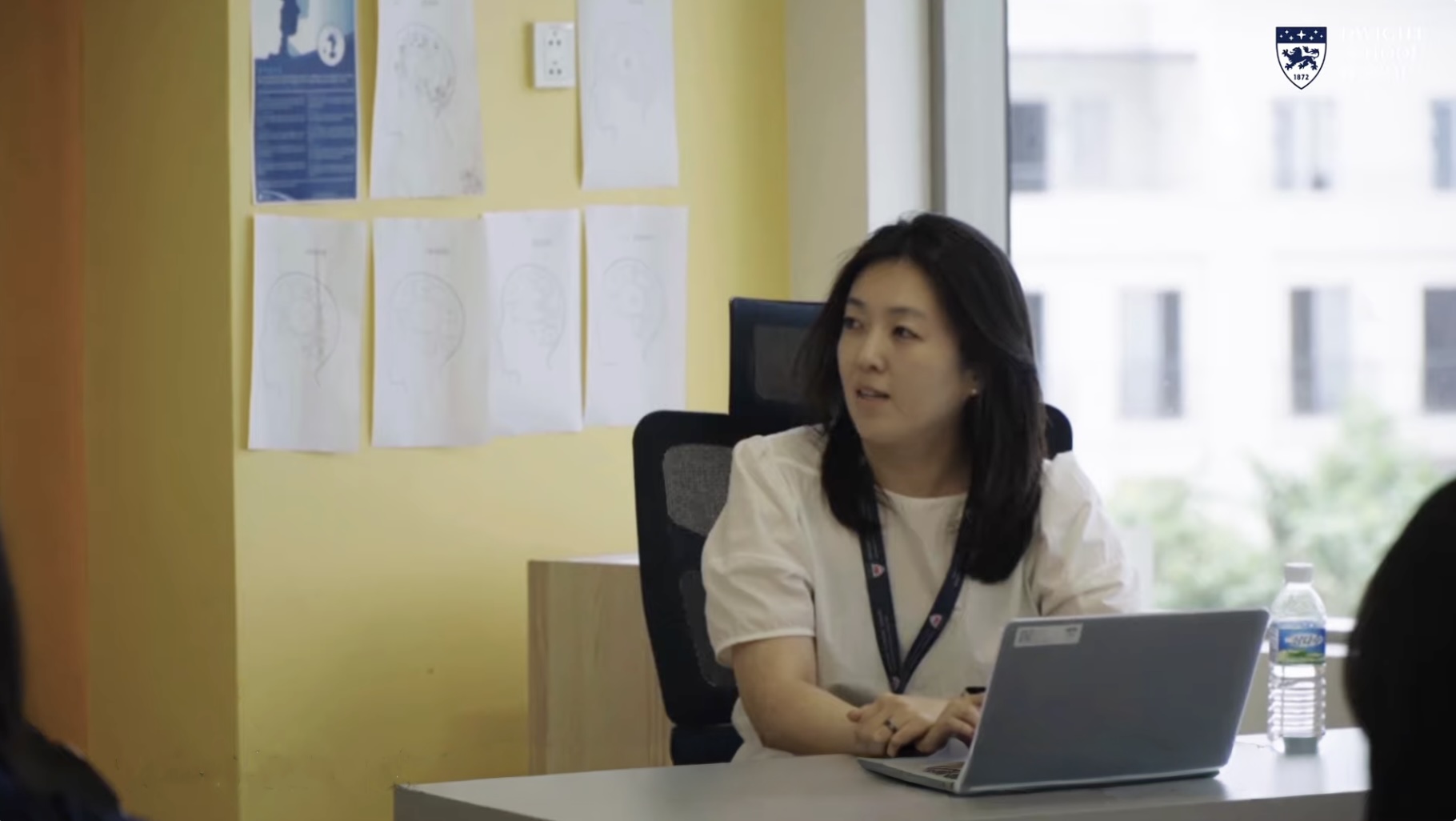
With 13 years of IB experience, Jinyeong’s passion for education began with stories. From modern plays to classic Korean poems, she has always seen literature as a powerful way to uncover people’s hidden emotions and motivations. Teaching in an IB context keeps that passion alive, because it is rooted in inquiry. For her, the classroom feels like a shared detective agency: when a PYP student asks “why?” about a character’s choice and they search for clues together, or when MYP students analyze a text to reveal an author’s message about society, she isn’t just teaching language. She is guiding students in exploring what it means to be human.
Global Perspectives in Language and Literature
At Dwight School Hanoi, Jinyeong brings the school’s global vision to life by showing students how stories connect people across cultures. In her Language and Literature classes, students encounter texts from around the world and explore universal themes such as identity, justice, empathy, and belonging. They might compare a Korean folktale with a story from another culture to see how different societies express similar human experiences. Through this work, her students come to understand that literature is not confined by language or borders, it’s a window into our shared humanity.
Growing Critical, Compassionate Readers
Jinyeong believes Language and Literature holds a special place in students’ learning because it encourages them to explore ideas and perspectives through narrative. Her goal is for students to move beyond simply reading texts to thinking critically, empathizing with others, and developing their own voice. Watching them grow from surface-level readers into thoughtful interpreters of meaning is one of the most rewarding parts of her work.
Literary Inspirations
She is especially inspired by writers such as Haruki Murakami and Yi Sang, whose works explore the subconscious and the spaces in between reality and language. Their writing reminds her that literature is less about providing answers and more about asking better questions. This philosophy shapes her teaching every day, as she helps students see language as a mirror of thought and imagination.